Birch Glacier Collapse Buries Swiss Village of Blatten
A catastrophic glacier collapse in Switzerland’s Lötschental valley has buried the Alpine village of Blatten under tons of ice, rock, and mud, leaving a landscape of devastation and raising urgent questions about climate-linked instability in the Alps.
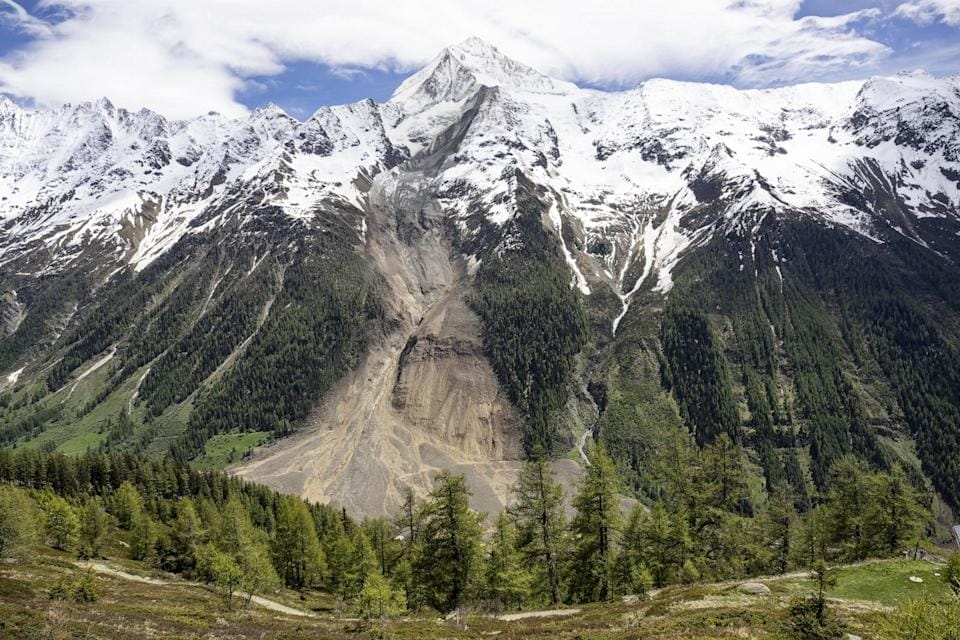
The collapse occurred on Wednesday, when a massive chunk of the Birch Glacier broke off, triggering a powerful landslide. Glaciologists say the disaster was not entirely unexpected—it was the result of a “cascading series of failures” tied to warming temperatures, destabilized terrain, and heavy debris buildup.
What Caused the Collapse
Experts point to three key factors that led to the glacier’s failure:
- Permafrost Thawing:
Glaciologist Mathieu Morlighem of Dartmouth College explains that melting permafrost, which typically helps stabilize alpine rock walls, was a critical trigger.
“Permafrost acts like glue,” Morlighem said. “When it melts, everything can collapse.” - Heavy Rock Debris:
Days before the collapse, millions of pounds of rock fell onto the glacier’s surface, according to Bethan Davies, professor of glaciology at Newcastle University. The additional load stressed the already vulnerable ice. - Rapid Warming:
A surge in high temperatures on Monday accelerated glacier melt and internal tension, causing deep cracking and ice weakening.
“This was a marked acceleration,” Davies noted. “Lots of cracks started to form.”
Emergency Measures Came Too Late
Officials had been monitoring the glacier closely in recent days. After detecting signs of instability, hundreds of villagers were ordered to evacuate as a precaution. But even with early warnings, the scale and speed of the collapse overwhelmed efforts to contain it.
The resulting landslide flattened homes and caused widespread destruction in Blatten. There’s also growing concern about potential flooding in the River Lonza due to debris blockages and redirected meltwater.
Echoes of Past Disasters—But on a Bigger Scale
Switzerland has seen similar glacier-related disasters before. A collapse in the Silvretta Alps in 2023 also involved permafrost thawing, but the Birch Glacier event is “much worse,” experts say. The amount of ice and meltwater carried down the mountainside vastly amplified the impact.
Climate Change: A Clear Warning Sign
Glaciologists and climate scientists warn that the Birch Glacier collapse is part of a growing pattern. The Swiss Federal Institute for Forest, Snow and Landscape Research says that glacial retreat and instability are accelerating, with long-term consequences for freshwater supply, ecosystems, and infrastructure.
“A quarter of Switzerland’s glaciers could still be saved,” researchers note, “if immediate global climate action is taken.”
A Village Lost, a Lesson Delivered
Blatten, once a quiet Alpine village, now stands as a symbol of glacial fragility and climate urgency. As emergency crews search for survivors and assess damage, scientists urge governments to view this not as a freak event—but as a preview of what’s to come in a warming world.
More…
- https://www.npr.org/2025/05/29/g-s1-69527/switzerland-village-blatten-birch-glacier-landslide-alps
- https://www.reuters.com/sustainability/climate-energy/flood-risk-threatens-swiss-valley-after-village-destroyed-by-glacier-2025-05-30/
- https://abcnews.go.com/International/glaciologists-birch-glacier-collapsed-burying-nearby-swiss-town/story?id=122308200